
The global oceans are affected by climate change and other anthropogenic impacts but the ecological consequences are poorly understood, particularly in the deep ocean. To research these questions, the RRS James Cook research expedition JC263 has set sail to the Porcupine Abyssal Plain Sustained Observatory (PAP-SO) in the North East Atlantic to make the latest observations at the world’s longest-running abyssal ecology time-series station.
Research at the PAP-SO is focused on observation of long-term change in the water column, at the seabed, and the connections between them. By studying seafloor ecology at PAP-SO since 1985, water column particle flux since 1992, and surface ocean and atmosphere parameters since 2003 the objective is to understand the causes and consequences of multidecadal change in NE Atlantic ecosystems.
JC263 is the first research expedition of the new NERC funded AtlantiS programme and will deliver the latest observations and data to monitor essential ocean variables such as ocean temperature and salinity, carbon dioxide, oxygen, nutrient content, particulate matter, and the abundance of phytoplankton, zooplankton and seafloor invertebrates. The research will use a combination of traditional approaches and cutting-edge technology to ensure the highest quality scientific data, and comparability with the earliest observations in the time series.
In a busy programme the multidisciplinary team of scientists, engineers and ship’s crew will maintain autonomous in situ infrastructure equipped with a range of sensors and imaging systems, take new samples throughout the water column and seabed, and make new observations with seabed cameras. The autonomous infrastructure includes a surface ocean mooring operated in collaboration with the Met Office, sediment trap moorings in mid-water and seafloor time-lapse cameras.
The team aboard will collect data for AtlantiS but also contribute to programmes such as Integrated Carbon Observing System (ICOS), OceanSITES, and Minke. The expedition team is supported NEODASS who provide satellite data daily giving an overview of the sea surface temperature, sea surface height and chlorophyll concentration.
Look out for updates on this blog, @PAP_observatory and @NOCnews on X / Twitter and the National Oceanography Centre on LinkedIn throughout our research expedition.
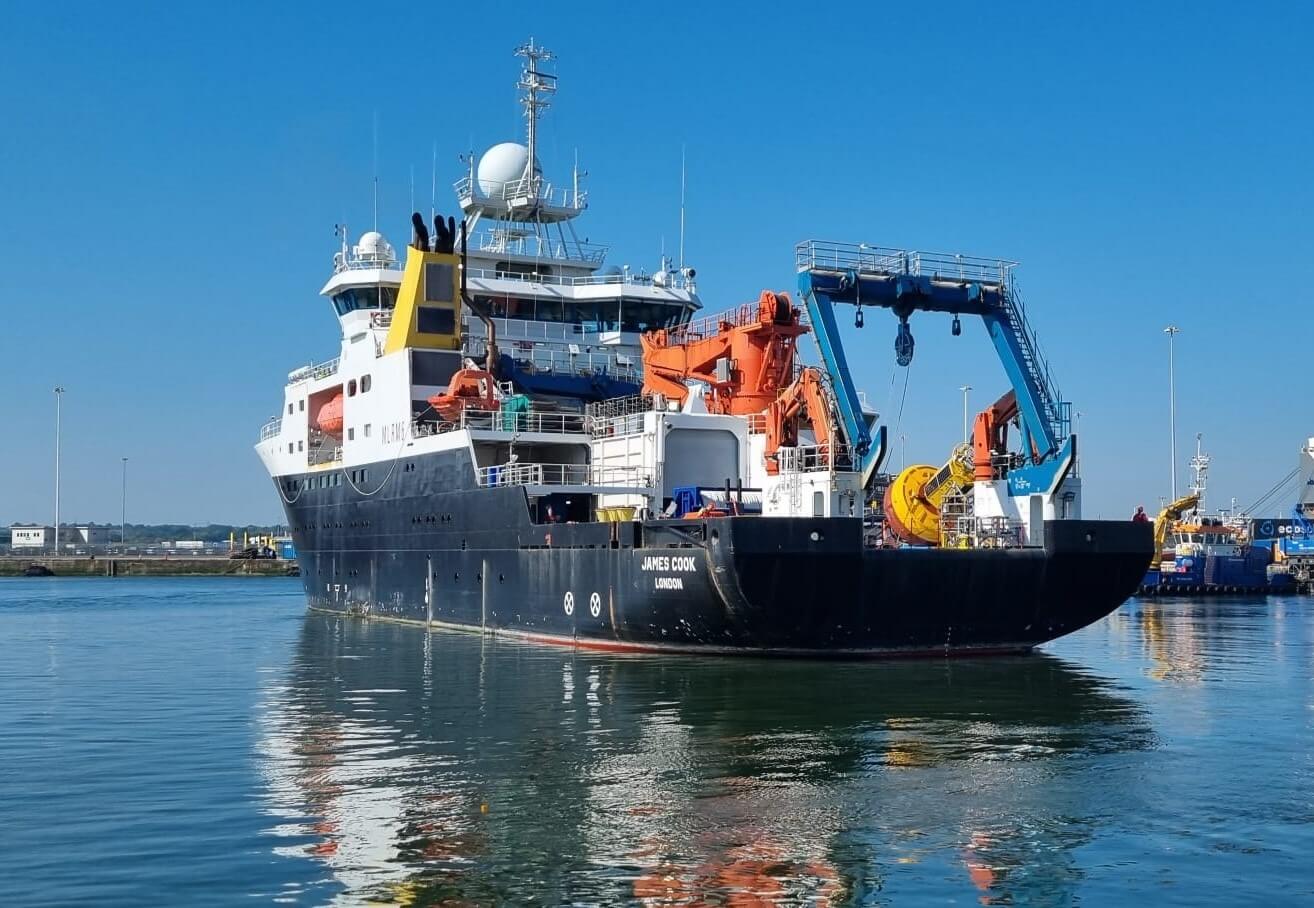
RRS James Cook departs for the Porcupine Abyssal Plain Sustained Observatory.
Be part of the community helping our ocean thrive.