


What do subsea cables do?
Hidden beneath the ocean, thinner than a garden hose, subsea cables form the invisible backbone of modern civilisation. They carry more than 99% of international digital data, enabling everything from video calls to financial transactions worth trillions. Yet these critical lifelines face threats from underwater landslides, volcanic eruptions, and a changing climate.
At NOC, we're working to understand these hazards, protect vulnerable communities, and transform the cables themselves into vast environmental monitoring systems that can detect earthquakes, tsunamis, and even the subtle signals of climate change.

What happened when Hunga volcano erupted?
In January 2022, Hunga volcano in the South Pacific triggered the most explosive volcanic event of the 21st century. Beyond the dramatic ash plume and tsunamis, the eruption had an immediate and devastating impact on global communications. A powerful and fast-moving seafloor sediment flow generated by the eruption severed the only international fibre-optic cable connecting the Kingdom of Tonga to the rest of the world, cutting off digital communications for weeks at a critical time for disaster response and recovery.
NOC research later revealed that these were the fastest seafloor flows ever recorded, travelling at speeds exceeding 120 kilometres per hour. The damage wasn't limited to the international cable. A domestic cable was also severed over 100 kilometres away, taking 18 months to repair. For a nation dependent on a single cable connection, the impact was profound. Hospitals couldn't access medical records, businesses couldn't process transactions, families couldn't contact loved ones abroad. The $38 million cable represented more than infrastructure. It was Tonga's lifeline to the world.
Podcast
Events like this reveal how modern society depends on subsea cables in ways most people never realise. Watch our Newsplash video or listen to the Into the Blue podcast to hear how we uncovered what happened beneath the waves.

Newsplash

How important are subsea cables to modern society?
Over 1.8 million kilometres of fibre-optic cables, no wider than a garden hose, carry more than 99% of international digital data traffic across the ocean floor. These cables underpin global communications, financial systems, cloud computing, and trillions of pounds in daily transactions. In the UK alone, subsea cables contribute an estimated £545 billion annually to the economy. Subsea power cables also connect offshore renewable energy installations to shore and link national electricity grids, playing a crucial role in the transition to net zero.
The dependency becomes starkest when cables fail. The 2006 earthquake off Taiwan triggered underwater landslides that damaged multiple cables, temporarily removing 80% of Hong Kong's trading capacity. For island nations and remote coastal communities that rely on single cable connections, the impact can be even more severe. When Tonga's cable failed in 2022, the entire country was digitally isolated. For such communities, cable resilience isn't a convenience. It's essential for healthcare, education, emergency response, and economic survival.
The Times has explored how we depend on this fragile network, whilst NERC's Impact Awards video showcases the global importance of our research.

What hazards threaten subsea cables?
Despite their importance, subsea cables face threats from both natural hazards and human activities. Underwater landslides can travel hundreds or even thousands of kilometres from their source, breaking multiple cables simultaneously. Our research on cable-breaking sediment flows off West Africa in 2020 revealed how river floods plunging into the ocean can trigger powerful underwater avalanches that sever cables far offshore. Earthquakes and volcanic eruptions pose direct threats, whilst powerful ocean currents can expose and damage cables over time.
Climate change is altering this risk landscape in ways we're only beginning to understand. Rising sea levels threaten cable landing stations where cables come ashore. Increasing storm intensity and shifting sediment dynamics can accelerate seabed erosion and expose buried cables. Changes in ocean circulation may influence the frequency and magnitude of deep-sea sediment flows. Tropical cyclones, which already pose risks to cables in certain regions, may shift their patterns as ocean temperatures change. Without research to anticipate these evolving threats, infrastructure could become increasingly vulnerable, amplifying economic losses and hindering our ability to adapt to climate change.
In shallow waters, human activities including fishing and anchoring can cause damage. Understanding where these different hazards overlap helps us identify the most vulnerable locations and design more resilient cable routes.

How does NOC research protect subsea cables?
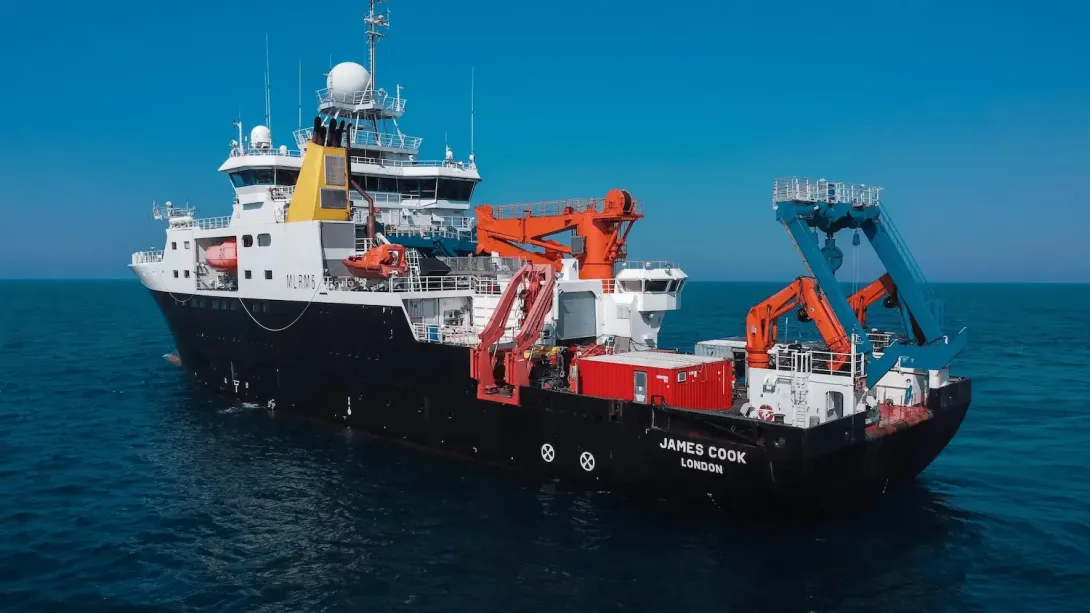
Ensuring the resilience of a global infrastructure network that spans from dynamic coastal zones to the deepest abyssal plains requires diverse expertise and tools. We deploy research ships, remotely operated vehicles, and autonomous underwater vehicles to map and sample the seabed in high resolution. These surveys reveal landslide scars, sediment pathways, volcanic deposits, and habitats, providing critical information for assessing both geohazards and ecological sensitivity.
Our numerical models simulate waves, currents, sediment transport, and future climate scenarios, helping forecast how hazards may intensify or shift geographically under climate change. This allows industry and governments to design more resilient cable routes and understand which existing cables face the greatest risks. Satellite remote sensing tracks coastal erosion, shoreline change, and storm impacts, all key risks for the locations where cables come ashore and connect to terrestrial networks.
This research directly informs policymakers and industry bodies, including the International Cable Protection Committee and European Subsea Cables Association. Our work has contributed to UK national risk assessments and maritime security strategies, helping ensure that infrastructure decisions are grounded in the best available science rather than assumptions that may no longer hold in a changing climate.
How does NOC research protect subsea cables?
Ensuring the resilience of a global infrastructure network that spans from dynamic coastal zones to the deepest abyssal plains requires diverse expertise and tools. We deploy research ships, remotely operated vehicles, and autonomous underwater vehicles to map and sample the seabed in high resolution. These surveys reveal landslide scars, sediment pathways, volcanic deposits, and habitats, providing critical information for assessing both geohazards and ecological sensitivity.
Our numerical models simulate waves, currents, sediment transport, and future climate scenarios, helping forecast how hazards may intensify or shift geographically under climate change. This allows industry and governments to design more resilient cable routes and understand which existing cables face the greatest risks. Satellite remote sensing tracks coastal erosion, shoreline change, and storm impacts, all key risks for the locations where cables come ashore and connect to terrestrial networks.
This research directly informs policymakers and industry bodies, including the International Cable Protection Committee and European Subsea Cables Association. Our work has contributed to UK national risk assessments and maritime security strategies, helping ensure that infrastructure decisions are grounded in the best available science rather than assumptions that may no longer hold in a changing climate.
What was the first global assessment of climate risks to cables?
Climate change alters the frequency and intensity of hazards such as storms, sea-level rise, coastal erosion, and sea ice dynamics. NOC delivered the first global assessment of how these changes will affect subsea cables and landing stations, identifying future hazard hotspots that may emerge as the planet continues to warm.
This research, highlighted in Scientific American, revealed geographic pinch points where multiple climate-related hazards converge. These are places where cables face compound risks from rising seas, intensifying storms, and changing sediment dynamics. The analysis helps industry plan for the long term, identifying where new cables should avoid or where existing infrastructure may need additional protection. For vulnerable island nations, this information proves particularly critical, highlighting which communities face the greatest risks of digital isolation as climate impacts intensify.
How can cables become environmental sensors?
Increasingly, fibre-optic cables are being used as scientific platforms, capable of sensing environmental changes along thousands of kilometres of seabed. Through projects such as FULLOCEANFIBRE, NOC pioneers this approach, working with partners including the National Physical Laboratory and international cable operators to transform telecommunications networks into distributed environmental sensor arrays.
The technique analyses tiny backscattered light signals within fibre cores. By sending laser pulses down the cable and measuring how light scatters back, scientists can detect vibrations, temperature changes, and strain along entire cable lengths from the shore and in near real-time. This capability dramatically expands what we can observe in the ocean. Because global fibre networks already span ocean basins, we can monitor vast areas without installing new instruments, enabling real-time, basin-scale observation at lower cost than traditional approaches.
The applications prove remarkably diverse. This approach enhances detection of earthquakes, submarine landslides, volcanic eruptions, and tsunamis, supporting early warning systems that protect coastal populations. It's particularly valuable in currently underserved regions that lack dense networks of traditional sensors. Our research has shown how these systems can detect ocean currents, monitor long-term climate trends, and even track whale movements. Ongoing work explores whether cable sensing could detect early signs of climate tipping points, providing advance warning of potentially irreversible changes in ocean circulation or ice sheet stability.
Find out how we're turning cables into ocean observatories.

What about the environmental impact of cables?
NOC research ensures that cable installation and maintenance minimise environmental impact whilst the infrastructure serves its critical function. Whilst burial in shallow waters can temporarily disturb seabed habitats, careful route planning, improved burial techniques, and environmental monitoring reduce ecological harm. Our work with partners has produced guidance on how to assess and minimise these impacts during installation and maintenance operations.
Recent work addresses an increasingly important issue: the environmental considerations of decommissioning and recycling legacy cables. Since the 1850s, approximately 3.5 million kilometres of subsea cables have been installed worldwide. Many legacy systems are now out of service, and questions arise about whether to leave them in place or recover them. NOC led the first comprehensive environmental assessment of subsea cable decommissioning, providing an evidence base to guide sustainable recovery and recycling decisions. The BBC explored some of these environmental considerations in detail.
This work reflects a broader commitment to ensuring that essential infrastructure development proceeds in ways that protect marine ecosystems. As we install more cables to connect renewable energy and support the digital economy, understanding and minimising environmental impacts becomes increasingly important.

How does cable research connect to broader ocean science?
Understanding subsea cables connects directly to broader ocean science themes in ways that might not be immediately obvious. Research on sediment transport, crucial for predicting cable-breaking landslides, also informs our understanding of how carbon and nutrients move through the ocean system. The climate modelling we use to forecast future hazards to cables simultaneously advances our ability to predict how ocean circulation patterns may shift. The biodiversity surveys we conduct along cable routes contribute to broader efforts to map and protect marine ecosystems.
Cable sensing technology opens entirely new research possibilities. Using cables to detect ocean currents provides data that helps us understand heat transport and climate regulation. Earthquake detection contributes to our knowledge of how tectonic processes shape ocean basins. Even seemingly esoteric capabilities, like detecting whale songs through fibre-optic cables, advance our understanding of marine mammal behaviour and distribution.
This research exemplifies how ocean science must integrate across disciplines and applications. Understanding how the ocean works as part of the wider Earth system requires us to consider everything from sediment dynamics to climate change to the infrastructure humans have placed in the marine environment. Ensuring that essential infrastructure remains resilient in a changing climate isn't separate from ocean science. It's a fundamental part of understanding and managing our relationship with the ocean.

Who does NOC work with on cable research?
Research on subsea cables requires collaboration across unusual boundaries. We work closely with the International Cable Protection Committee and European Subsea Cables Association, industry groups that bring together cable operators, installers, and other stakeholders. These partnerships ensure our research addresses real operational challenges rather than hypothetical scenarios.
Government engagement proves equally important. Our work informs UK national risk assessments and maritime security strategies, helping policymakers understand vulnerabilities in critical infrastructure. For island nations particularly dependent on cable connections, we provide evidence that supports resilience planning and investment decisions.
Academic collaborations span geophysics, oceanography, engineering, and environmental science. The cable sensing work, for instance, brings together expertise in fibre optics, seismology, physical oceanography, and signal processing. International partnerships, including with researchers in Greece, Canada, the United States, and Germany, ensure we can tackle challenges that cross national boundaries and ocean basins.
This collaborative approach reflects how addressing real-world challenges requires bringing together diverse expertise and perspectives. Cable resilience isn't purely a technical problem or purely a scientific one. It sits at the intersection of infrastructure, environment, economy, and society.
What future developments can we expect?
Cable sensing technology continues to evolve rapidly. Current research explores how to extract more information from existing cables, potentially detecting phenomena we haven't yet imagined. As machine learning techniques advance, we may be able to identify subtle patterns in cable sensor data that reveal early warning signs of environmental changes or emerging hazards.
The coverage of cable sensing will likely expand as more operators make their systems available for environmental monitoring. Each new cable that comes online with sensing capability extends our ocean observing network. Ongoing work aims to establish cable sensing as a routine component of tsunami early warning systems, particularly in regions that currently lack adequate coverage.
Climate change will continue altering the risk landscape for cables, requiring ongoing research to understand emerging threats. As we install more cables to connect renewable energy and support growing digital connectivity, ensuring these systems remain resilient whilst minimising environmental impacts becomes increasingly critical. The integration of cable route planning with marine spatial planning will help ensure infrastructure development proceeds sustainably.
Perhaps most transformatively, the dual use of cables for communications and environmental sensing may become standard practice, turning necessary infrastructure into scientific assets that benefit everyone. This exemplifies how we can design systems that serve multiple purposes, maximising value whilst minimising environmental footprint.
How does NOC communicate cable research to the public?
NOC researchers actively engage with diverse audiences to communicate the importance of subsea cable research. We present at international conferences on marine geoscience and telecommunications resilience, participate in industry workshops with cable operators and renewable energy developers, and provide briefings to government bodies on critical infrastructure security.
Media coverage has helped bring this hidden infrastructure to public attention. Beyond the articles and videos linked throughout this page, we've contributed to public lectures, podcasts, and educational content that showcase the infrastructure beneath our oceans and its role in enabling sustainable energy transitions. These efforts aim to make visible what typically remains hidden: the ocean-spanning network that makes modern digital life possible.
Through educational outreach, we help people understand how ocean science underpins global connectivity, economic stability, and climate resilience. When audiences grasp that their video call travelled through cables on the ocean floor, or that tsunami warnings might soon come from telecommunications infrastructure, the relevance of ocean research becomes immediately tangible.
