
Globally the ocean absorbs about a quarter of the carbon dioxide produced on land. This varies seasonally and by region. We visit the PAP-SO in spring just as the largest plankton bloom is starting, shown by the orange and red colours in the satellite map below. This productivity makes the northeast Atlantic a key region for carbon dioxide uptake into the ocean.
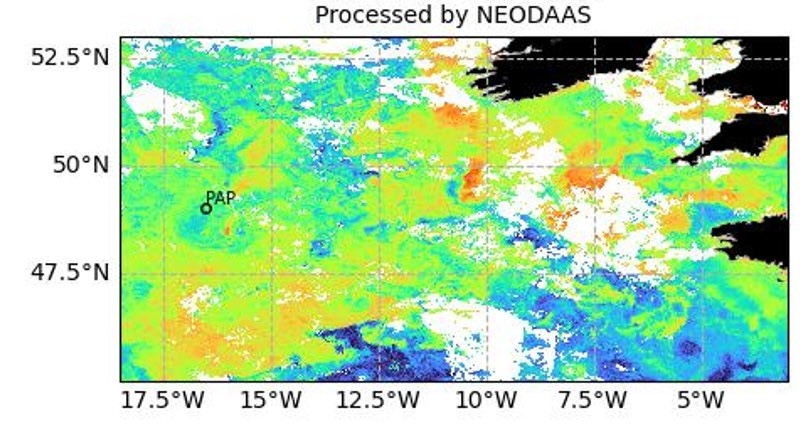
Satellite image of NE Atlantic chlorophyll.
On JC247 we are using several methods to measure this process. The Met Office ODAS buoy carries instruments for year-round measurement of ocean biogeochemistry, including seawater and atmospheric carbon dioxide (Pro-Oceanus). We observe the phytoplankton bloom at PAP-SO with chlorophyll, oxygen and nutrient sensors that we can compare with satellite images. This year we have an exciting addition to our upper ocean measurements – an underwater holographic camera (LISST-Holo) we can use to measure plankton communities in the surface water. All these measurements help us understand drivers of carbon dioxide uptake.
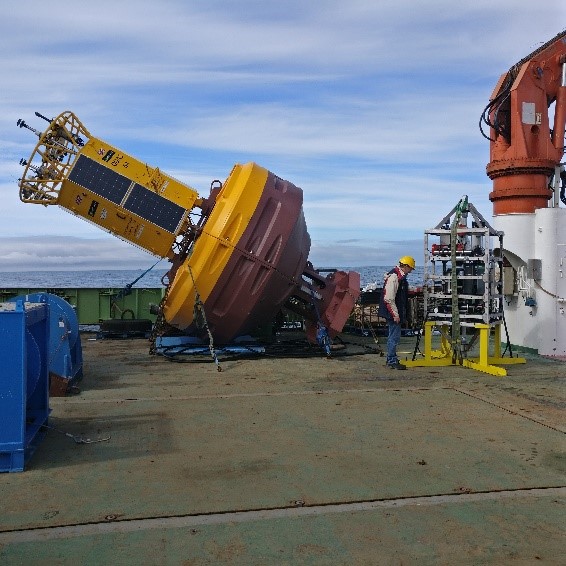
PAP buoy on deck.
During the research cruise we take physical water samples around the PAP-SO, sampling right down to 4850m depth. The water will be analysed in our laboratories on board, and ashore at NOC. We also have a SubCtech ‘flow through’ system on board. It allows us to map surface seawater carbon dioxide in the whole region around PAP-SO. From the summer of this year a similar system will be fitted permanently to the ship to make measurements during other research cruises and during transit, with the benefit of gathering data in under surveyed regions of the world.
All of the carbon dioxide data we collect on JC247 will contribute to the Surface Ocean CO2 Atlas (SOCAT). This global map of carbon dioxide helps in our understanding of climate change and ocean acidification. PAP data also contributes to the Integrated Carbon Observation System which uses key long-running ocean, land and atmospheric greenhouse gas sites across Europe. We are excited that the PAP-SO has been accepted as a ‘labelled ICOS station’ for carbon dioxide measurements from 2023.
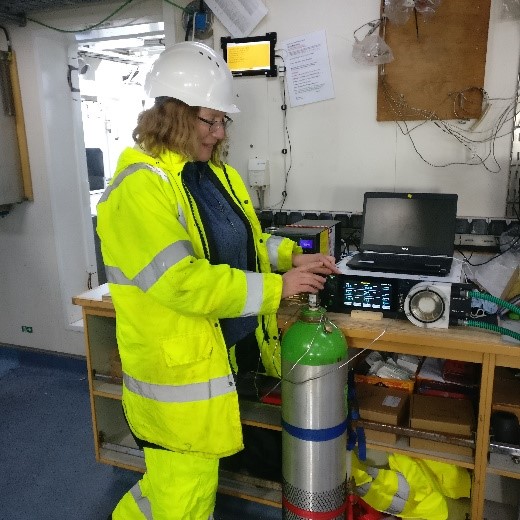
Sue Hartman operating our underway CO2 system.
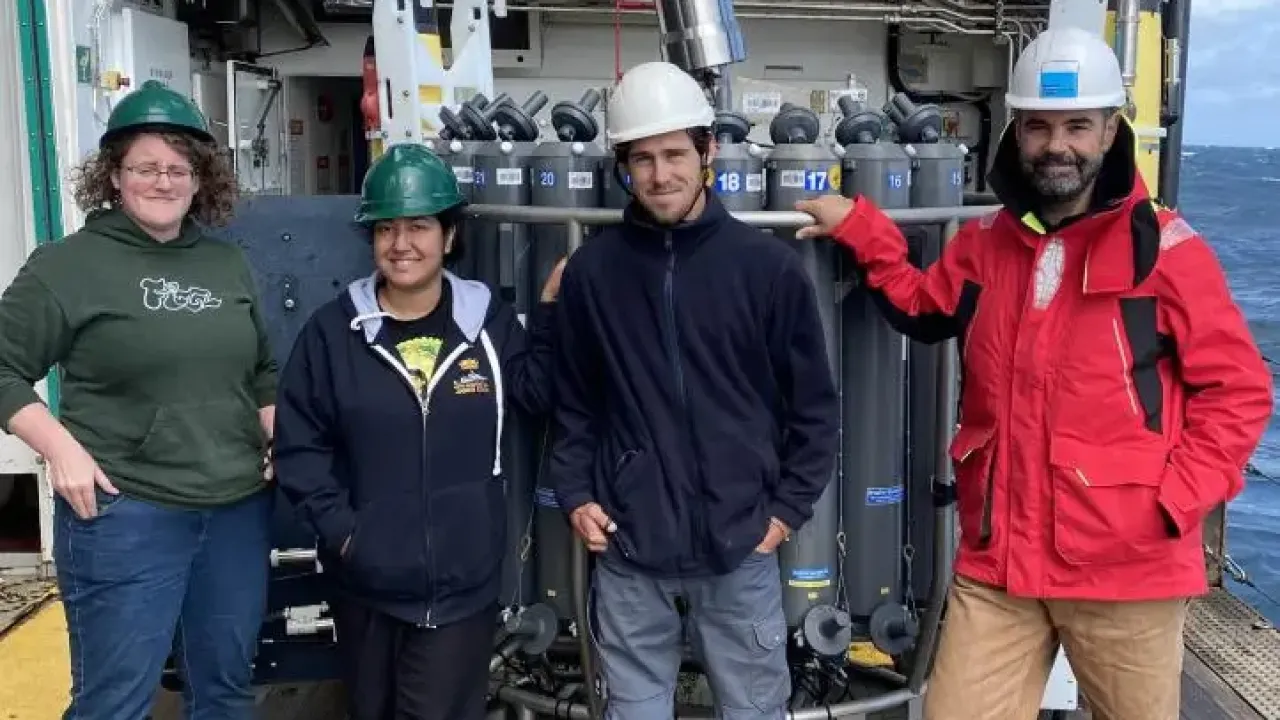
The team on board the RRS James Cook are grateful to the Met Office for use of the ODAS buoy at PAP-SO as well as all of the technicians, scientists and engineers (both onboard and ashore) who have helped instrument the buoy.
Be part of the community helping our ocean thrive.